
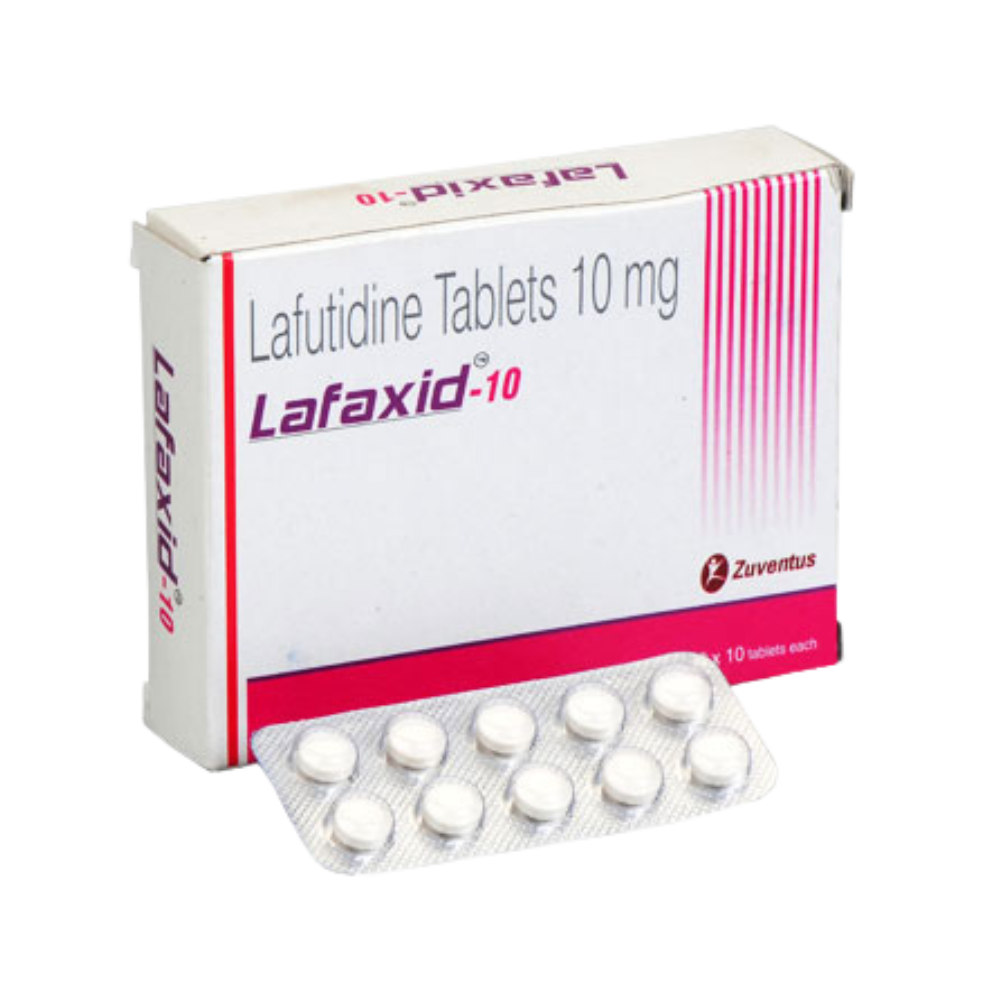
Lafutidine Tablets
LAFUTIDINE belongs to a group of medicines called ‘H2-receptor antagonists’, which acts as an antacid. It works by reducing the amount of acid in the stomach which helps in the relief of acid-related indigestion and heartburn. It is used in the treatment of peptic ulcers and gastroesophageal reflux disease (acid reflux). It is also used in the treatment of Zollinger-Ellison syndrome (a condition in which the tumors formed in the pancreas, and duodenum increases stomach acids) and gastric mucosal lesions.
Description
LAFUTIDINE belongs to a class of medicines called ‘H2-receptor antagonists’. It is used in the treatment of peptic ulcers and gastroesophageal reflux disease (acid reflux). Peptic ulcers are sores that develop in the lining of the stomach, lower esophagus or small intestine. Gastroesophageal reflux disease (GERD) occurs when stomach acid frequently flows back into the tube connecting your mouth and stomach (esophagus). This backwash (acid reflux) can irritate the lining of your esophagus.
LAFUTIDINE contains ‘lafutidine’ which acts as an antacid. It works by reducing the amount of acid in the stomach which helps in the relief of acid-related indigestion and heartburn.
LAFUTIDINE must be taken in the dose and duration advised by the doctor. Based on the severity of the medical condition, your doctor may prescribe LAFUTIDINE to take once daily before bedtime or twice daily in the morning and before bedtime with or without food. Common side-effects of LAFUTIDINE are fatigue, drowsiness, headache, increased liver enzymes, constipation, increased uric acid level in the blood, diarrhea, muscle pain, protein in the urine. These side effects resolve on their own, if it persists, stop the LAFUTIDINE and contact your doctor immediately.
Do not take LAFUTIDINE if you are allergic, other H2 receptor antagonists, or any other ingredients present in it. Before taking LAFUTIDINE, inform your doctor if you are taking prescription or non-prescription medications, including antacids, nutritional supplements, or herbal products. Inform your doctor if you have any gastrointestinal problems, kidney diseases, and liver diseases. Inform your doctor if you are pregnant or planning to become a pregnant/breastfeeding woman.
Uses of LAFUTIDINE
Gastroesophageal reflux disease(acid reflux) and Peptic ulcer disease
Medicinal Benefits
LAFUTIDINE belongs to a group of medicines called ‘H2-receptor antagonists’, which acts as an antacid. It works by reducing the amount of acid in the stomach which helps in the relief of acid-related indigestion and heartburn. It is used in the treatment of peptic ulcers and gastroesophageal reflux disease (acid reflux). It is also used in the treatment of Zollinger-Ellison syndrome (a condition in which the tumors formed in the pancreas, and duodenum increases stomach acids) and gastric mucosal lesions.
Directions for Use
LAFUTIDINE must be taken in the dose and duration advised by the doctor. Do not crush or break or chew the LAFUTIDINE.Swallow it with a glass full of water.
Storage
Store in a cool and dry place away from sunlight
Side Effects of LAFUTIDINE
- Fatigue
- Drowsiness
- Headache
- Increased liver enzymes
- Constipation
- Increased uric acid level in blood
- Diarrhea
- Muscle pain
- Protein in urine
Additional information
| Strength | 10 mg |
|---|---|
| Form | Tablets |
| Pack Size | 1*10 |
| Brand | Lafutidine Tablets |
| Therapeutic Use | Gastroesophageal reflux disease(acid reflux) and Peptic ulcer disease |

Reviews
There are no reviews yet.