
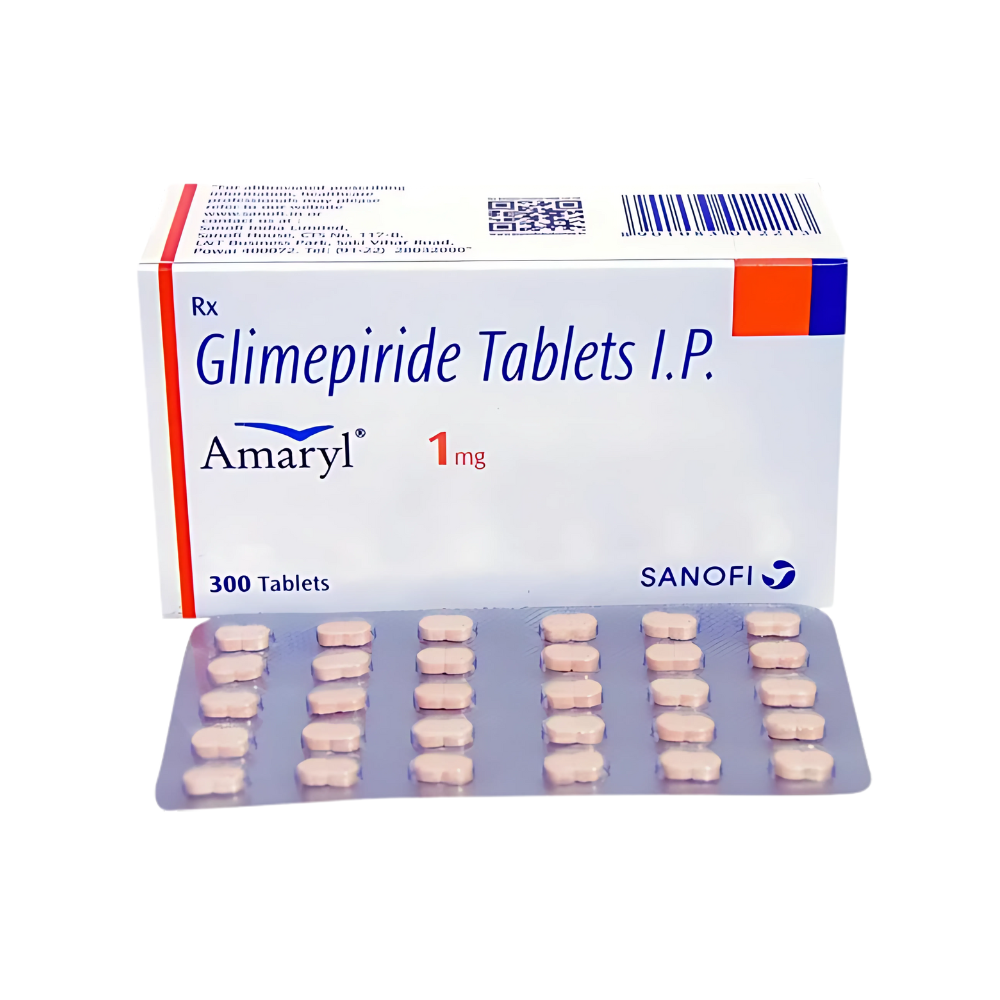
Glimepiride Tablet
You may need to take 1 or 2 tablets to make up your daily dose. The usual starting dose for adults is 1mg, taken once a day. Your doctor may increase your dose gradually over a few weeks or months, up to a regular dose of 4mg once a day. The maximum daily dose is 6mg.
Description
GLIMEPIRIDE
GLIMEPIRIDE belongs to a class of antidiabetic called ‘sulfonylureas’ used to lower raised blood sugar levels in Type 2 diabetes mellitus (non-insulin-dependent diabetes mellitus – NIDDM). Type 2 diabetes develops if the body does not produce enough insulin or when your body’s insulin does not work as well as it should. Insulin is a substance that helps to lower the level of sugar in your blood, especially after meals.
The GLIMEPIRIDE contains Glimepiride which acts on insulin-secreting cells called beta cells inside the pancreas and activates calcium channels on cells which lets insulin pass out of the cell. This insulin then makes each cell in the body take up glucose and utilize it, thus lowering raised blood glucose. Therefore, it prevents symptoms of type 2 diabetes.
Take GLIMEPIRIDE as prescribed by your doctor. Some people may experience an allergic reaction (skin rash, hives & sensitivity to sun rays), liver dysfunction (jaundice, bile duct blockage, and hepatitis), seizures, coma & low glucose levels. Most of these side effects of GLIMEPIRIDE do not require medical attention and gradually resolve over time. However, if the side effects persist or worsen, please consult your doctor.
GLIMEPIRIDE should not be stopped even if you feel better without consulting your doctor as the sugar level keeps changing. If you stop taking GLIMEPIRIDE abruptly, it may increase your sugar levels which could further increase the risk of eyesight loss (retinopathy), kidney (nephropathy) and nerve damage (neuropathy). GLIMEPIRIDE should not be taken if you have type 1 diabetes mellitus or severe kidney or liver disease. Please inform your doctor if you have any heart disease or plan to get pregnant or breastfeed.
Uses of GLIMEPIRIDE
Type 2 diabetes.
Medicinal Benefits
GLIMEPIRIDE is used in people with type 2 diabetes to minimize elevated blood sugar levels with a balanced diet and exercise in combination. GLIMEPIRIDE can be combined with insulin or other forms of oral antidiabetic medication. GLIMEPIRIDE decreases blood sugar levels in a diabetic patient by increasing the production and secretion of insulin from the pancreas beta cells. Thus, it helps in controlling increased blood sugar levels after the meal.
Directions for Use
Swallow it as a whole with water; do not crush, break or chew it.
Storage
Store in a cool and dry place away from sunlight.
Side Effects of GLIMEPIRIDE
- Allergic reactions
- Headache
- Nausea
- Blood pressure drop
- Shock
- Abnormal liver function
- Including skin and eye yellowing (jaundice)
- Bile flow issues (cholestasis)
- Liver inflammation (hepatitis) or failure of the liver
Drug-Drug Interactions Checker List:
- ASPIRIN
- ROSUVASTATIN
- DULOXETINE
- DAPAGLIFLOZIN
- GLYBURIDE
- INSULIN
- CANAGLIFLOZIN
- SITAGLIPTIN
- EMPAGLIFLOZIN
- FUROSEMIDE
- ATORVASTATIN
- PREGABALIN
- METFORMIN
- NAPROXEN
- CLOPIDOGREL
- IBUPROFEN
- WARFARIN
Additional information
| Strength | 1Mg, 2Mg, 4Mg |
|---|---|
| Form | Tablet |
| Pack Size | 1*10 |
| Brand | Glimepiride Tablet |
| Therapeutic Use | Glimepiride is used to treat high blood sugar levels caused by type 2 diabetes. |


Reviews
There are no reviews yet.