
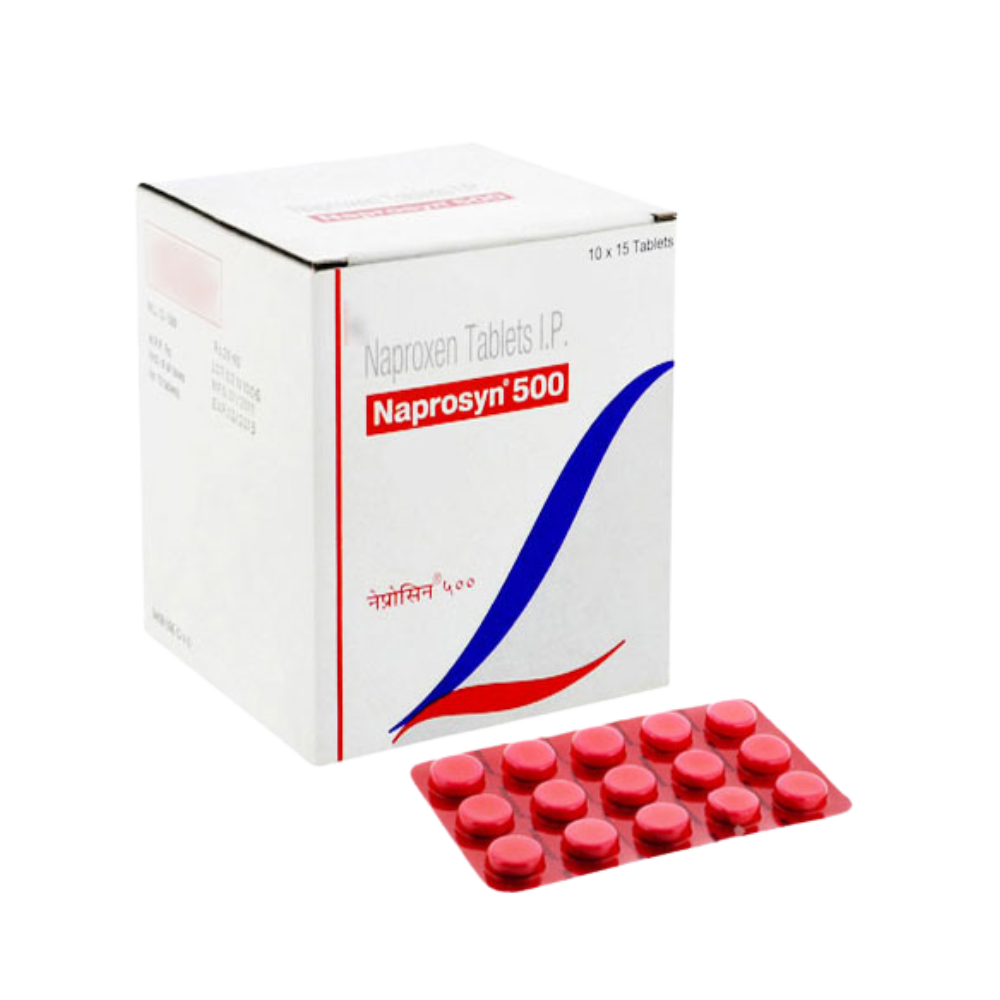
Naproxen Tablets
APROXEN is used to reduce pain and swelling in muscles and joints in conditions such as osteoarthritis, rheumatoid arthritis, ankylosing spondylitis (pain and stiffness in the backbone), cervical spondylitis (wear and tear of spinal discs in neck) and acute gout (severe pain due to excess of uric acid). It is also used to treat fibrositis (muscle pain and stiffness), tenosynovitis (swelling of tendons), low back pain, strains and sprains.
Description
NAPROXEN belongs to a class of pain killers known as non-steroidal anti-inflammatory drugs (NSAIDs). NAPROXEN is primarily used to reduce pain and swelling in muscles and joints in conditions such as osteoarthritis, rheumatoid arthritis, ankylosing spondylitis (pain and stiffness in the backbone), cervical spondylitis (wear and tear of spinal discs in neck) and acute gout (severe pain due to excess of uric acid). Arthritis is a condition that causes swelling of one or more joints resulting in pain and stiffness of joints that worsen over time.
NAPROXEN contains Naproxen which works by blocking the action of cyclo-oxygenase (COX) enzyme in the body that is involved in the production of certain chemical substances such as prostaglandins that cause pain and swelling. Thereby, helps in relieving pain and swelling associated with different types of arthritis.
Take NAPROXEN as prescribed. Your doctor will advise you on how often you take your NAPROXEN based on your medical condition. In some cases, you may experience indigestion, heartburn, stomach pain, nausea, headache, dizziness, drowsiness, bruising, itching, rash, ringing in your ears. Most of these side effects of NAPROXEN do not require medical attention and gradually resolve over time. However, if the side effects persist or worsen, please consult your doctor.
If you are known to be allergic to NAPROXEN or any other medicines, please tell your doctor. If you are pregnant or breastfeeding, please inform your doctor before taking NAPROXEN. Do not consume alcohol with NAPROXEN as it may increase the risk of stomach bleeding. NAPROXEN may cause an increased risk of severe heart problems like myocardial infarction, and stroke, which can be fatal. It should not be used by the patient who has had undergone recent heart bypass surgery or going to have it. NAPROXEN increases the risk of severe gastrointestinal conditions like bleeding, ulceration, and perforation of the stomach or intestines, which can be fatal.
Uses of NAPROXEN
Joint pains, Menstrual cramp
Medicinal Benefits
NAPROXEN is used to reduce pain and swelling in muscles and joints in conditions such as osteoarthritis, rheumatoid arthritis, ankylosing spondylitis (pain and stiffness in the backbone), cervical spondylitis (wear and tear of spinal discs in neck) and acute gout (severe pain due to excess of uric acid). It is also used to treat fibrositis (muscle pain and stiffness), tenosynovitis (swelling of tendons), low back pain, strains and sprains.
Directions for Use
Tablet: Take it preferably with or after food to avoid stomach upset or take as advised by the doctor. Swallow it as a whole with a glass of water. Do not crush, chew or break it. Suspension: Shake the bottle well before use. Check the label for directions and take it with food or as advised by the doctor with the help of a measuring cup.
Storage
Store in a cool and dry place away from sunlight
Side Effects of NAPROXEN
- Indigestion
- Heartburn
- Stomach pain
- Constipation
- Gas
- Vomiting
- Nausea
- Diarrhoea
Additional information
| Form | Tablets |
|---|---|
| Pack Size | 1*15 |
| Brand | Naproxen Tablets |
| Therapeutic Use | Joint pains, Menstrual cramp |



Reviews
There are no reviews yet.