
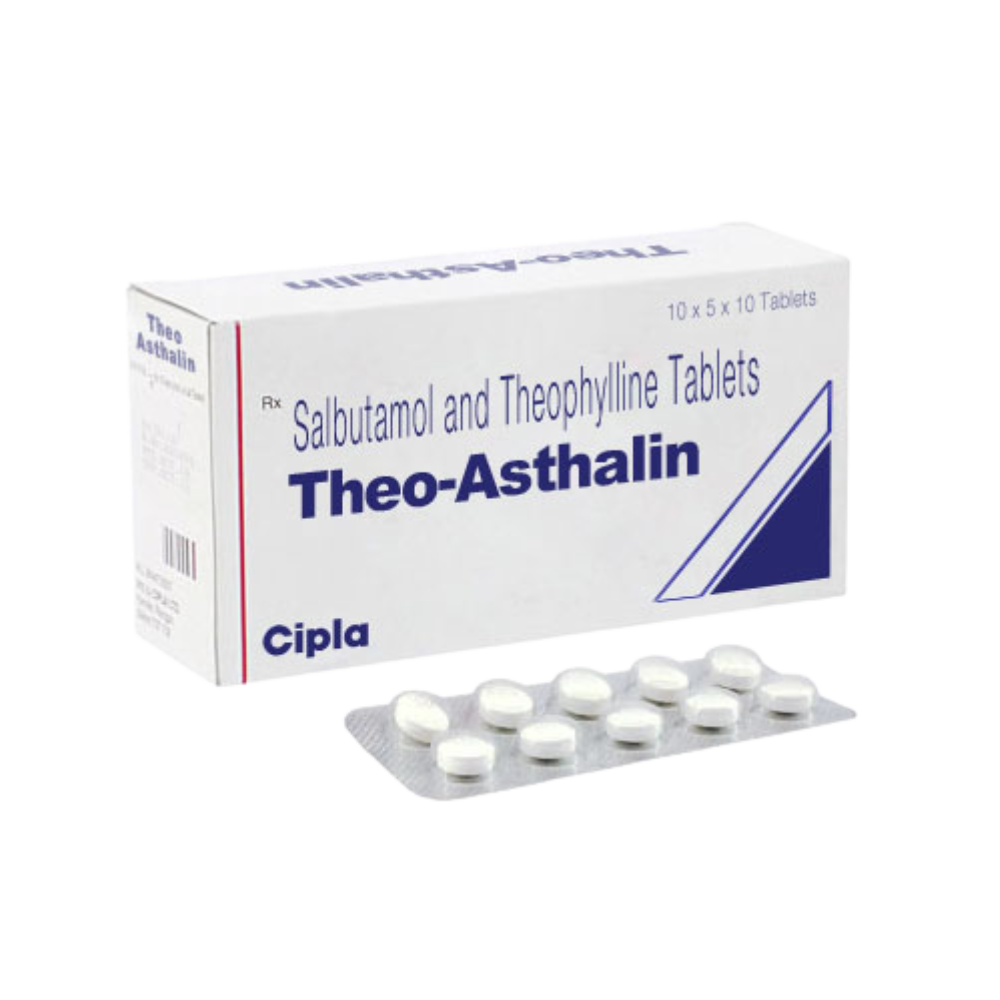
Salbutamol and Theophylline Tablets
Theophylline belongs to the class of xanthines and Salbutamol is an adrenergic agent (selective beta-2-adrenoreceptor agonist) used in the systemic treatment of obstructive airway diseases like asthma and COPD. Both Salbutamol and Theophylline work by relaxing the airway in the lungs and making it easier to breathe in.
Description
SALBUTAMOL+THEOPHYLLINE is a combination of respiratory-related medicine containing Salbutamol (bronchodilator) and Theophylline (xanthine and phosphodiesterase inhibitor). Together it helps in the management of chronic conditions of the respiratory system including asthma and chronic obstructive pulmonary disease (COPD). Asthma is a breathing problem in which airways narrow, swell, and produce extra mucus, leading to difficulty in breathing. On the other hand, COPD is a group of progressive lung diseases, with emphysema (shortness of breath) and chronic bronchitis (inflammation of bronchial tubes). Initially, it may be mild, but it can lead to total blockage of airways and damage the lungs in severe cases.
SALBUTAMOL+THEOPHYLLINE helps in the management of asthma and chronic obstructive pulmonary disease (COPD) by relaxing and widening the narrowed or blocked airways (bronchial tubes) of the lungs making it easier to breathe in. SALBUTAMOL+THEOPHYLLINE is given to treat an asthma attack when it first starts (an acute attack) and for wheezing (a whistling sound during breath) induced by factors like cold or exercise.
SALBUTAMOL+THEOPHYLLINE should be taken as prescribed by the doctor. You may experience nausea, vomiting, restlessness, tremor, headache, muscle cramp, and increased heart rate in some cases. Most of these side effects of SALBUTAMOL+THEOPHYLLINE do not require medical attention and gradually resolve over time. However, if the side effects are persistent, reach out to your doctor.
Try not to stop taking this medicine of your own. Let your doctor know about this, as it may cause withdrawal symptoms. Do not take this medicine if you have any lung disease, muscle weakness (myasthenia gravis), sleeping disorder or difficulty sleeping (sleep apnoea), severe liver disease, or problem with alcohol or other prescription recreational drugs. SALBUTAMOL+THEOPHYLLINE is a habit-forming drug, and, hence there is a risk of dependence on this medicine. Before stopping this medicine, contact a doctor as it may cause withdrawal symptoms like anxiety, increased heart rate, tremors, or general unwell feeling.
Uses of SALBUTAMOL+THEOPHYLLINE
Asthma, Chronic obstructive pulmonary disease (COPD)
Medicinal Benefits
Theophylline belongs to the class of xanthines and Salbutamol is an adrenergic agent (selective beta-2-adrenoreceptor agonist) used in the systemic treatment of obstructive airway diseases like asthma and COPD. Both Salbutamol and Theophylline work by relaxing the airway in the lungs and making it easier to breathe in. SALBUTAMOL+THEOPHYLLINE is given to treat an asthma attack when it first starts (an acute attack) and for wheezing (a whistling sound during breath) induced by factors like cold or exercise in all the age groups from children to the elderly.
Directions for Use
Tablet/Capsule: Swallow it as a whole with water; do not crush, break or chew it. Oral Suspension/syrup: Shake the bottle well before each use. Take the prescribed dose by mouth using the measuring cup/dosing syringe/dropper.
Storage
Store in a cool and dry place away from sunlight
Side Effects of SALBUTAMOL+THEOPHYLLINE
- Headache
- Nausea (feeling sick)
- Vomiting
- Palpitations (throbbing heartbeat)
- Irregular heartbeat (arrhythmia)
- Anxiety
- Irritability
- Insomnia (lack of sleep)
- Muscle cramps
- Dizziness, or drowsiness
Additional information
| Strength | 2 Mg, 4 mg |
|---|---|
| Form | Tablets |
| Pack Size | 1*20 |
| Brand | Salbutamol and Theophylline Tablets |
| Therapeutic Use | asthma, Chronic Obstructive Pulmonary Disease (COPD) |


Reviews
There are no reviews yet.