
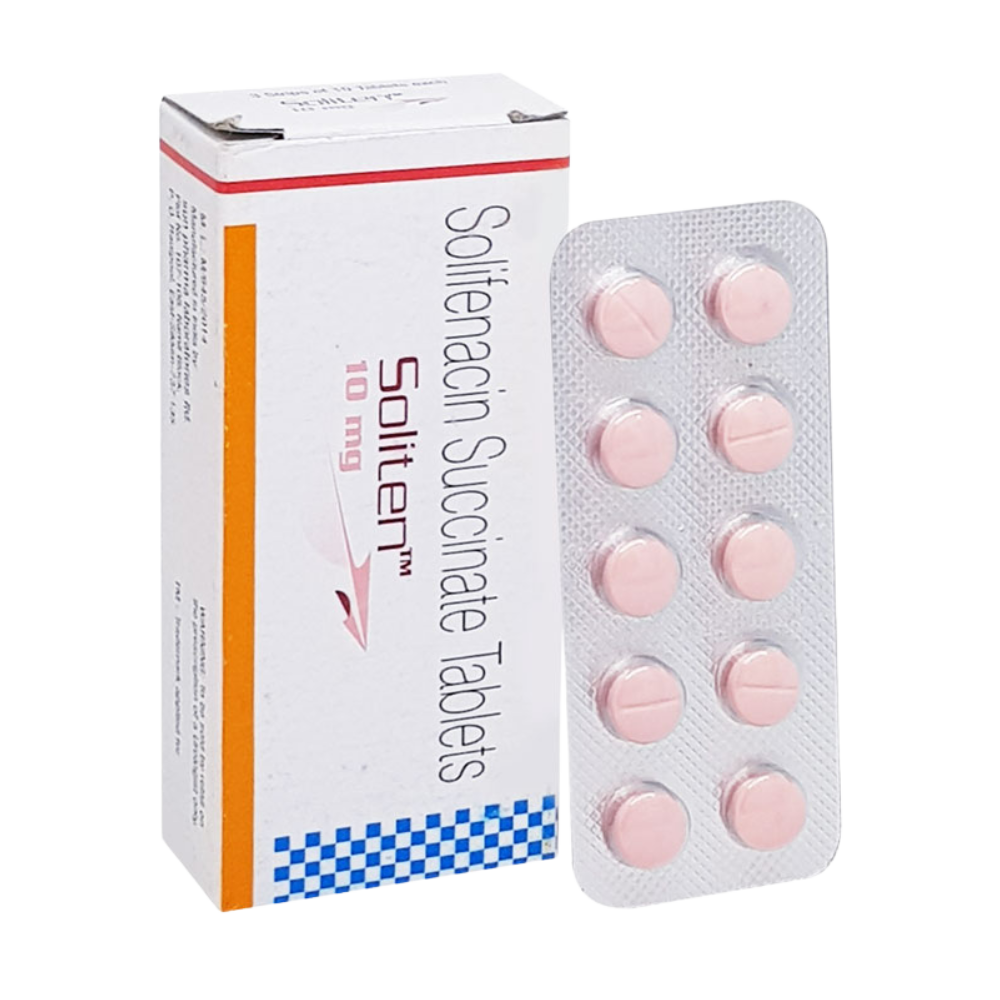
Solifenacin Succinate Tablets
SOLIFENACIN contains ‘solifenacin’ that belongs to the class of medications called ‘anticholinergics’. It can decrease the activity of the overactive bladder. In an overactive bladder, muscle contractions occur before the full expansion of the bladder causing the patient to have frequent urges to urinate. SOLIFENACIN can stop these sudden contractions of bladder muscles.
Description
SOLIFENACIN belongs to the group of medications called ‘urinary antagonists’ or ‘antispasmodics’ primarily used in the treatment of overactive bladder (OAB) symptoms. Overactive bladder is a condition in which the urinary bladder muscles constrict uncontrollably, thereby causing an urgent need to urinate, frequent urination, and inability to control urination. Besides this, SOLIFENACIN is also used for the treatment of neurogenic detrusor overactivity (a bladder control condition caused by neurological problems) in children 2 years and above.
SOLIFENACIN contains ‘Solifenacin’ that relaxes the urinary bladder muscles which in turn decreases the activity of the overactive bladder. In an overactive bladder, muscle contractions occur before the full expansion of the bladder causing the patient to have frequent urges to urinate. SOLIFENACIN stops these sudden contractions of urinary bladder muscles thereby enabling control over urination. Thus, it increases the amount and volume of urination that can be held by your bladder.
Take SOLIFENACIN as prescribed by the doctor. Common side-effects of SOLIFENACIN are dry mouth, blurred vision, constipation, nausea, dyspepsia (indigestion), abdominal pain, burping or belching, heartburn, and stomach upset. Inform your doctor if these side effects do not go away or get worse.
Do not take SOLIFENACIN if you are allergic to ‘solifenacin’ or any other ingredients present in it. Before taking SOLIFENACIN, inform your doctor if you have kidney disease, liver disease, bladder blockage, myasthenia gravis (a muscle disease), stomach or bowel problems (including constipation), glaucoma (increased pressure in the eye causing loss of vision), or a history of heart rhythm problems (including QT prolongation). Also, inform your doctor if you are pregnant or breastfeeding. Inform your doctor if you have an intolerance to sugars as this medicine contains lactose. Do not take grapefruit or grapefruit juice with this medication. Avoid driving or operating heavy machinery as this medicine may cause dizziness.
Uses of SOLIFENACIN
Overactive bladder (urinary incontinency)
Medicinal Benefits
SOLIFENACIN contains ‘solifenacin’ that belongs to the class of medications called ‘anticholinergics’. It can decrease the activity of the overactive bladder. In an overactive bladder, muscle contractions occur before the full expansion of the bladder causing the patient to have frequent urges to urinate. SOLIFENACIN can stop these sudden contractions of bladder muscles. It enables control over urination and increases the amount of urine that can be held by your bladder.
Directions for Use
Tablet: Take it with or without food as advised by the doctor. Swallow the tablet as a whole with a glass of water. Do not crush, break or chew it. Suspension: Shake the bottle well before use. Take the prescribed dose by mouth using the measuring cup/dosing syringe/dropper provided by the pack followed by a small glass of milk or water. Avoid taking it with other liquids or food to avoid bitter taste.
Storage
Store in a cool and dry place away from sunlight
Side Effects of SOLIFENACIN
- Dry mouth
- Blurred vision
- Constipation
- Nausea
- Dyspepsia (indigestion)
- Urinary tract infections
- Blurred vision
- Abdominal pain
- Burping or belching
- Heartburn
- Stomach upset
Additional information
| Strength | 10 mg |
|---|---|
| Form | Tablets |
| Pack Size | 1*15 |
| Brand | Solifenacin Succinate Tablets |
| Therapeutic Use | Overactive bladder (urinary incontinency) |


Reviews
There are no reviews yet.